Integrated electronic product development
We work in-house and with our trusted electronic engineering partners to develop and integrate bespoke electronics into your product. Developing electronics that include microprocessors, micro-controllers, sensors, actuation and PCBs into stylish, well performing product designs. Ranging from electro-mechanical products to internet of things (IoT) connected devices.
For more information on how we develop IoT products see our IoT case study.
Electronics and mechanical design, developed together
Electronics that are bolted on after the mechanical design is finished tend to compromise both. We bring electronic and industrial design together from the earliest concept stage, so decisions about battery capacity, connector placement, antenna position, heat dissipation and access for assembly and repair inform the product's form rather than fighting it later. This is particularly important for connected devices, where an aerial buried inside a metal enclosure or a battery sized without its charging and duty cycle in mind can undermine an otherwise well designed product.
Firmware and connectivity
Beyond the physical hardware, we consider the firmware and connectivity layer a product needs: how it wakes, sleeps, updates, and talks to a user's phone, a gateway, or the cloud. Getting this right early avoids costly rework later, when a product is closer to certification and production tooling has already been committed.
Rapid electronic prototyping
During initial development we may work in-house to produce electronic prototypes encompassing commercially off the shelf (COTS) electronics, Arduino, Raspberry Pi, or custom PCBA solutions. This allows us to have proven and specified an electronics solution quickly to ratify requirements for efficient and fast work with our electronics partners. Giving us the opportunity to test the product early, incorporating physical mechanical design, and providing valuable prototype learning and user feedback.
In lean development partner scenarios, we can use this capability to provide and prove value-add to business. Rapidly giving uplift in efficiency and process.
From proof of concept to a production-representative prototype
Electronic prototyping does not stop at a breadboard. These early builds feed into our staged prototyping process: a quick proof of concept confirms a function works at all, a works like, looks like (WLLL) build lets us and the client handle something that looks and behaves like the final product, and a pre-production prototype carries the changes needed to make that design efficient to manufacture. Moving between commercially off the shelf electronics and a custom PCBA at the right point in this journey is a judgement call: COTS modules get a concept proven fast, while a bespoke board is usually what is needed to hit a final size, cost and certification target.
PCBA design for manufacture
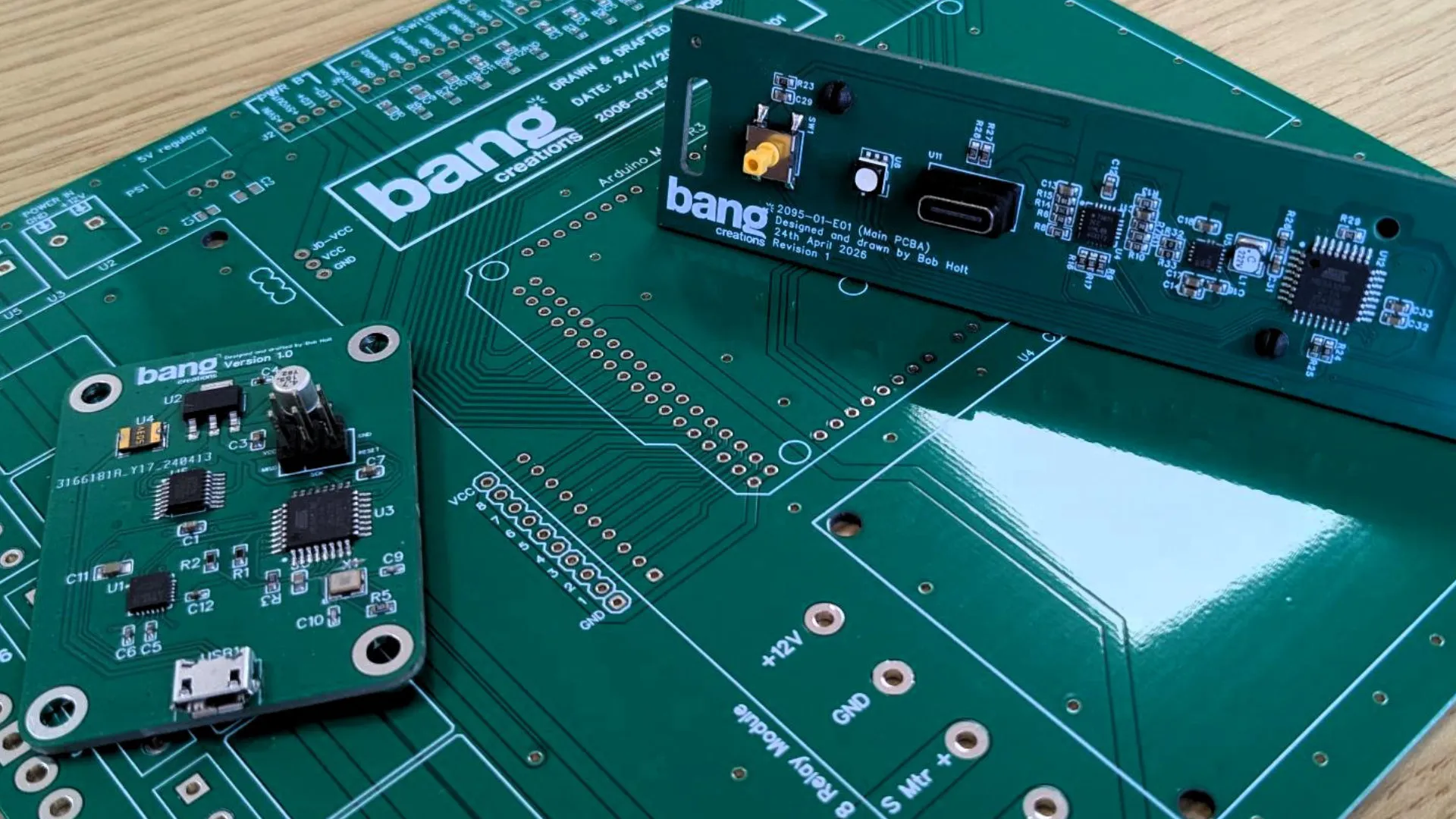
Working with a variety of electronics partners best suited for a particular projects needs, we identify how to make PCBA designs and electronics assemblies most suitable for cost-effective manufacture. This process includes careful part selection for supply chain reliability, and in-field performance, material selection for PCBs, and more.
Component selection and supply chain risk
Choosing components that are still in production, available from more than one supplier, and not on long lead times reduces the risk of a redesign part-way through manufacture. We weigh this against performance and cost at the point of design, rather than discovering a part is obsolete once tooling has already been committed.
Design for manufacture and assembly
A printed circuit board assembly (PCBA) that is easy to build is one designed with its assembly process in mind from the start: component placement suited to automated pick and place, test points that let a factory verify a board quickly, and a design that does not rely on manual rework to pass inspection. Getting this right at the design stage, alongside our manufacturing partners, keeps unit cost and defect rate down once a product is in production.
Electronics design for compliance
Electromagnetic Compatibility, (EMC), is the interaction of electrical and electronic equipment with its electromagnetic environment. All electronic devices have the potential to emit electromagnetic fields particularly on devices with radio, or IoT connected devices.
Our development process plans around the passing of EMC tests, and any other safety or compliance regulations. Prototypes are built to verify if they will not only be user friendly and function as intended, but pass testing when in production. Using pre-compliance testing, we also identify challenges for compliance early, before committing to larger spending to obtain certification.
Working alongside our safety testing service
Compliance is not only EMC. A connected or powered product typically also needs to pass electrical safety, radio and, depending on its market, other product-specific standards, each with its own test house and timeline. Our safety testing service identifies which standards apply to a product from the evaluation stage onward, so electronics and safety compliance are planned together rather than discovered late. For a worked example of how we take a product from prototype through to certification, see our case study on safety testing a new product.