
20 March 2026
How to Design, Prototype, Test and Manufacture Fabric-Based Baby Products

Back
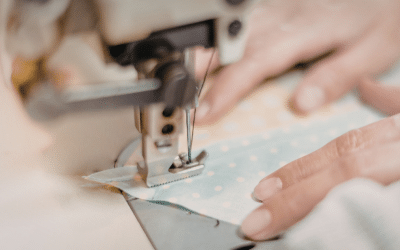
Developing fabric-based baby products requires a structured approach to design, testing and manufacturing. Successful products must balance safety compliance, material performance, usability and commercial viability.
Many brands have demonstrated how high-quality textile design can support retail success through strong material engineering and product performance testing.
It’s important to understand some of the main technical design considerations, these include:
- Fabric safety compliance
- Durability under repeated washing
- Ergonomic usability for parents and carers
- Sustainability expectations from consumers
Premium design-led brands have achieved a strong market presence by emphasising these areas, particularly durability, ergonomics, and high-quality material selection.
Why Baby Product Brands Need Technical Design Expertise
The baby product market is a highly regulated and competitive. Products must perform under real-world family use conditions while meeting strict safety requirements.
For companies, needing help bring a product to market, early engagement with design and development partners can help reduce manufacturing risk, improve product quality, and accelerate time to market. This expertise brings valuable knowledge across many areas which we outline below
The Design Process for fabric products
Developing fabric-based baby products follows a similar overall development structure to hard-sided physical products. However, textile products require specific knowledge of material behaviour, construction methods, and performance testing to successfully convert concepts into commercially viable products.
Experience across the full development process is essential to understanding the technical and commercial parameters required to bring concepts into production-ready products.
Typical development stages include:
Concept Development
The concept stage focuses on defining product performance requirements, user experience goals, and manufacturing feasibility. At this stage, early consideration of materials, construction methods, and safety requirements helps reduce later development risk.
Prototyping
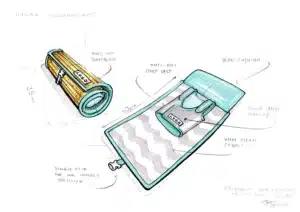
Iterative prototyping is particularly important for fabric baby products, where usability, and construction, under real-life conditions must be validated.
Engineering and Safety Validation
Engineering development ensures products meet relevant safety and performance standards.
Compliance requirements vary by market region but are considered early in development.
Individual fabrics need testing and certifying before production.
Alpha Production
Alpha production involves small-scale manufacturing runs and is used to validate user feedback, safety testing submission and durability testing. These Alpha production runs should be made with the certified fabrics and the whole product offering can then be evaluated or “pre-certified” to the relevant standards – such as EN71.
This is particularly important if the baby product has hard plastics attached to the fabric where the pull tests, and potential choke hazards can be evaluated to the relevant standard.
Full Manufacturing
Final production requires detailed technical specifications, quality control (QA/QC) processes, and supplier alignment to ensure consistent product performance.
Choosing the Right Fabrics for Baby Product Development
Fabric selection is one of the most important decisions in baby product development. Safety Compliance is a complex area and different target ages bring with it the understanding of small part and the addition of other areas such as chemical safety and flammability standards.
Comfort and Performance
Parents expect:
- Breathable fabrics
- Soft-touch materials
- Temperature regulation properties
Durability
Products must withstand:
- Daily washing
- Sterilisation processes
- Extended use cycles
Sustainability
UK consumers increasingly prefer:
- Organic textiles
- Low chemical processing
- Long-life product design

Prototyping Fabric Baby Products
The design process should follow structured engineering prototyping stages. Prototyping fabric products may need to be done using specialist equipment such as industrial sewing machine for thicker fabric and stronger thread.
Concept Pattern Development
This stage involves the creation of a 2D lay flat pattern which when folded up and constructed with other potential elements such as frames, support battens, will create the 3D items being created which validates:
- Product size and fit
- Basic ergonomic positioning
- Structural design feasibility:
For any hard manufacturing parts that would be tooled in production, rapid prototyping at this stage reduces expensive manufacturing changes later.
Functional Textile Prototyping
Functional prototypes test:
- Stitch strength and Elastic tension behaviour: Each seam needs to meet a pull test for tensile strength.
- Fastening system reliability. Selecting the most suitable system for application and method of use, whether it be poppers, zip, velcro etc.
These aspects are especially important for products such as bags, strollers, prams etc.
Real-World User Testing
Testing with real users is essential for market success. Focusing on the use case which may be
- One-handed product operation
- Night-time usability
- Cleaning and maintenance behaviour
Observational testing with parents provides valuable product insight.
UK Compliance and Safety Testing Requirements
Baby products sold must meet strict safety expectations, and test house submissions are expensive and timing is critical. Early assessment highlights risk areas, and final submission needs to be done on production product, which is why earlier we stressed the importance of pre – certification testing on the Alpha prototype production runs. These Alpha’s need to be as close to the final product to avoid resubmission
Common testing requirements include:
- Flammability testing
- Chemical safety testing
- Colour fastness testing
- Durability
- Mechanical seam strength testing
Meeting compliance standards early reduces regulatory delays and manufacturing costs.
Manufacturing Fabric Baby Products in the UK and Overseas
Many brands combine design development with global manufacturing supply chains. Early prototyping will often be done locally but also it can be beneficial to have the end manufacture make early prototypes and pre-production units to ensure you can test with real live fabrics and manufacturing processes. Once you have a signed off design this must be referenced for quality along with the following critical manufacturing documentation includes:
- Technical specification packs (TSPs)
- Construction diagrams
- Fabric sourcing information, acceptable colour variations, any allowable deviations
- Tolerance measurements.
Clear documentation improves production quality and reduces manufacturing errors.
Why Choose Design-Led Product Development, and How Bang Creations helps UK Inventors, SMEs and Entrepreneurs
Fabric-based baby and wellbeing products are rarely just textile products. Most combine fabrics with other components such as structural elements, fastenings, padding, hardware, or integrated functional parts. Successfully developing these products requires expertise in both textile design and broader product engineering.
Having a development partner with experience across both areas is critical. Teams that combine deep textile knowledge with physical product development expertise are relatively rare and building that capability in-house can be expensive and time-consuming. For many companies, outsourcing this specialist development work ensures that the product is designed, engineered and manufactured in the right way from the beginning.
At Bang, we have supported brands such as SleepaSloth, Bubba Board, Lap Baby, and Alora developing baby, infant and wellbeing products by combining:
- Product strategy and design thinking
- Textile material knowledge and development
- Prototyping and engineering support
- Manufacturing preparation and supplier guidance
- This integrated approach helps clients reduce development risk while achieving faster time to market and higher product quality.
If you are developing a new baby or wellbeing product in the UK, early design planning around longevity, performance and manufacturability can significantly improve both commercial outcomes and product sustainability.
Start Your Baby Product Development Journey
If you are planning a new baby or wellbeing product, contact us to discuss how structured product design can help improve commercial performance, sustainability and manufacturing efficiency.
Back


20 March 2026
How to Design, Prototype, Test and Manufacture Fabric-Based Baby Products
Back
Developing fabric-based baby products requires a structured approach to design, testing and manufacturing. Successful products must balance safety compliance, material performance, usability and commercial viability.
Many brands have demonstrated how high-quality textile design can support retail success through strong material engineering and product performance testing.
It’s important to understand some of the main technical design considerations, these include:
- Fabric safety compliance
- Durability under repeated washing
- Ergonomic usability for parents and carers
- Sustainability expectations from consumers
Premium design-led brands have achieved a strong market presence by emphasising these areas, particularly durability, ergonomics, and high-quality material selection.
Why Baby Product Brands Need Technical Design Expertise
The baby product market is a highly regulated and competitive. Products must perform under real-world family use conditions while meeting strict safety requirements.
For companies, needing help bring a product to market, early engagement with design and development partners can help reduce manufacturing risk, improve product quality, and accelerate time to market. This expertise brings valuable knowledge across many areas which we outline below
The Design Process for fabric products
Developing fabric-based baby products follows a similar overall development structure to hard-sided physical products. However, textile products require specific knowledge of material behaviour, construction methods, and performance testing to successfully convert concepts into commercially viable products.
Experience across the full development process is essential to understanding the technical and commercial parameters required to bring concepts into production-ready products.
Typical development stages include:
Concept Development
The concept stage focuses on defining product performance requirements, user experience goals, and manufacturing feasibility. At this stage, early consideration of materials, construction methods, and safety requirements helps reduce later development risk.
Prototyping
Iterative prototyping is particularly important for fabric baby products, where usability, and construction, under real-life conditions must be validated.
Engineering and Safety Validation
Engineering development ensures products meet relevant safety and performance standards.
Compliance requirements vary by market region but are considered early in development.
Individual fabrics need testing and certifying before production.
Alpha Production
Alpha production involves small-scale manufacturing runs and is used to validate user feedback, safety testing submission and durability testing. These Alpha production runs should be made with the certified fabrics and the whole product offering can then be evaluated or “pre-certified” to the relevant standards – such as EN71.
This is particularly important if the baby product has hard plastics attached to the fabric where the pull tests, and potential choke hazards can be evaluated to the relevant standard.
Full Manufacturing
Final production requires detailed technical specifications, quality control (QA/QC) processes, and supplier alignment to ensure consistent product performance.
Choosing the Right Fabrics for Baby Product Development
Fabric selection is one of the most important decisions in baby product development. Safety Compliance is a complex area and different target ages bring with it the understanding of small part and the addition of other areas such as chemical safety and flammability standards.
Comfort and Performance
Parents expect:
- Breathable fabrics
- Soft-touch materials
- Temperature regulation properties
Durability
Products must withstand:
- Daily washing
- Sterilisation processes
- Extended use cycles
Sustainability
UK consumers increasingly prefer:
- Organic textiles
- Low chemical processing
- Long-life product design
Prototyping Fabric Baby Products
The design process should follow structured engineering prototyping stages. Prototyping fabric products may need to be done using specialist equipment such as industrial sewing machine for thicker fabric and stronger thread.
Concept Pattern Development
This stage involves the creation of a 2D lay flat pattern which when folded up and constructed with other potential elements such as frames, support battens, will create the 3D items being created which validates:
- Product size and fit
- Basic ergonomic positioning
- Structural design feasibility:
For any hard manufacturing parts that would be tooled in production, rapid prototyping at this stage reduces expensive manufacturing changes later.
Functional Textile Prototyping
Functional prototypes test:
- Stitch strength and Elastic tension behaviour: Each seam needs to meet a pull test for tensile strength.
- Fastening system reliability. Selecting the most suitable system for application and method of use, whether it be poppers, zip, velcro etc.
These aspects are especially important for products such as bags, strollers, prams etc.
Real-World User Testing
Testing with real users is essential for market success. Focusing on the use case which may be
- One-handed product operation
- Night-time usability
- Cleaning and maintenance behaviour
Observational testing with parents provides valuable product insight.
UK Compliance and Safety Testing Requirements
Baby products sold must meet strict safety expectations, and test house submissions are expensive and timing is critical. Early assessment highlights risk areas, and final submission needs to be done on production product, which is why earlier we stressed the importance of pre – certification testing on the Alpha prototype production runs. These Alpha’s need to be as close to the final product to avoid resubmission
Common testing requirements include:
- Flammability testing
- Chemical safety testing
- Colour fastness testing
- Durability
- Mechanical seam strength testing
Meeting compliance standards early reduces regulatory delays and manufacturing costs.
Manufacturing Fabric Baby Products in the UK and Overseas
Many brands combine design development with global manufacturing supply chains. Early prototyping will often be done locally but also it can be beneficial to have the end manufacture make early prototypes and pre-production units to ensure you can test with real live fabrics and manufacturing processes. Once you have a signed off design this must be referenced for quality along with the following critical manufacturing documentation includes:
- Technical specification packs (TSPs)
- Construction diagrams
- Fabric sourcing information, acceptable colour variations, any allowable deviations
- Tolerance measurements.
Clear documentation improves production quality and reduces manufacturing errors.
Why Choose Design-Led Product Development, and How Bang Creations helps UK Inventors, SMEs and Entrepreneurs
Fabric-based baby and wellbeing products are rarely just textile products. Most combine fabrics with other components such as structural elements, fastenings, padding, hardware, or integrated functional parts. Successfully developing these products requires expertise in both textile design and broader product engineering.
Having a development partner with experience across both areas is critical. Teams that combine deep textile knowledge with physical product development expertise are relatively rare and building that capability in-house can be expensive and time-consuming. For many companies, outsourcing this specialist development work ensures that the product is designed, engineered and manufactured in the right way from the beginning.
At Bang, we have supported brands such as SleepaSloth, Bubba Board, Lap Baby, and Alora developing baby, infant and wellbeing products by combining:
- Product strategy and design thinking
- Textile material knowledge and development
- Prototyping and engineering support
- Manufacturing preparation and supplier guidance
- This integrated approach helps clients reduce development risk while achieving faster time to market and higher product quality.
If you are developing a new baby or wellbeing product in the UK, early design planning around longevity, performance and manufacturability can significantly improve both commercial outcomes and product sustainability.
Start Your Baby Product Development Journey
If you are planning a new baby or wellbeing product, contact us to discuss how structured product design can help improve commercial performance, sustainability and manufacturing efficiency.
20 March 2026
How to Design, Prototype, Test and Manufacture Fabric-Based Baby Products
Back
Developing fabric-based baby products requires a structured approach to design, testing and manufacturing. Successful products must balance safety compliance, material performance, usability and commercial viability.
Many brands have demonstrated how high-quality textile design can support retail success through strong material engineering and product performance testing.
It’s important to understand some of the main technical design considerations, these include:
- Fabric safety compliance
- Durability under repeated washing
- Ergonomic usability for parents and carers
- Sustainability expectations from consumers
Premium design-led brands have achieved a strong market presence by emphasising these areas, particularly durability, ergonomics, and high-quality material selection.
Why Baby Product Brands Need Technical Design Expertise
The baby product market is a highly regulated and competitive. Products must perform under real-world family use conditions while meeting strict safety requirements.
For companies, needing help bring a product to market, early engagement with design and development partners can help reduce manufacturing risk, improve product quality, and accelerate time to market. This expertise brings valuable knowledge across many areas which we outline below
The Design Process for fabric products
Developing fabric-based baby products follows a similar overall development structure to hard-sided physical products. However, textile products require specific knowledge of material behaviour, construction methods, and performance testing to successfully convert concepts into commercially viable products.
Experience across the full development process is essential to understanding the technical and commercial parameters required to bring concepts into production-ready products.
Typical development stages include:
Concept Development
The concept stage focuses on defining product performance requirements, user experience goals, and manufacturing feasibility. At this stage, early consideration of materials, construction methods, and safety requirements helps reduce later development risk.
Prototyping
Iterative prototyping is particularly important for fabric baby products, where usability, and construction, under real-life conditions must be validated.
Engineering and Safety Validation
Engineering development ensures products meet relevant safety and performance standards.
Compliance requirements vary by market region but are considered early in development.
Individual fabrics need testing and certifying before production.
Alpha Production
Alpha production involves small-scale manufacturing runs and is used to validate user feedback, safety testing submission and durability testing. These Alpha production runs should be made with the certified fabrics and the whole product offering can then be evaluated or “pre-certified” to the relevant standards – such as EN71.
This is particularly important if the baby product has hard plastics attached to the fabric where the pull tests, and potential choke hazards can be evaluated to the relevant standard.
Full Manufacturing
Final production requires detailed technical specifications, quality control (QA/QC) processes, and supplier alignment to ensure consistent product performance.
Choosing the Right Fabrics for Baby Product Development
Fabric selection is one of the most important decisions in baby product development. Safety Compliance is a complex area and different target ages bring with it the understanding of small part and the addition of other areas such as chemical safety and flammability standards.
Comfort and Performance
Parents expect:
- Breathable fabrics
- Soft-touch materials
- Temperature regulation properties
Durability
Products must withstand:
- Daily washing
- Sterilisation processes
- Extended use cycles
Sustainability
UK consumers increasingly prefer:
- Organic textiles
- Low chemical processing
- Long-life product design
Prototyping Fabric Baby Products
The design process should follow structured engineering prototyping stages. Prototyping fabric products may need to be done using specialist equipment such as industrial sewing machine for thicker fabric and stronger thread.
Concept Pattern Development
This stage involves the creation of a 2D lay flat pattern which when folded up and constructed with other potential elements such as frames, support battens, will create the 3D items being created which validates:
- Product size and fit
- Basic ergonomic positioning
- Structural design feasibility:
For any hard manufacturing parts that would be tooled in production, rapid prototyping at this stage reduces expensive manufacturing changes later.
Functional Textile Prototyping
Functional prototypes test:
- Stitch strength and Elastic tension behaviour: Each seam needs to meet a pull test for tensile strength.
- Fastening system reliability. Selecting the most suitable system for application and method of use, whether it be poppers, zip, velcro etc.
These aspects are especially important for products such as bags, strollers, prams etc.
Real-World User Testing
Testing with real users is essential for market success. Focusing on the use case which may be
- One-handed product operation
- Night-time usability
- Cleaning and maintenance behaviour
Observational testing with parents provides valuable product insight.
UK Compliance and Safety Testing Requirements
Baby products sold must meet strict safety expectations, and test house submissions are expensive and timing is critical. Early assessment highlights risk areas, and final submission needs to be done on production product, which is why earlier we stressed the importance of pre – certification testing on the Alpha prototype production runs. These Alpha’s need to be as close to the final product to avoid resubmission
Common testing requirements include:
- Flammability testing
- Chemical safety testing
- Colour fastness testing
- Durability
- Mechanical seam strength testing
Meeting compliance standards early reduces regulatory delays and manufacturing costs.
Manufacturing Fabric Baby Products in the UK and Overseas
Many brands combine design development with global manufacturing supply chains. Early prototyping will often be done locally but also it can be beneficial to have the end manufacture make early prototypes and pre-production units to ensure you can test with real live fabrics and manufacturing processes. Once you have a signed off design this must be referenced for quality along with the following critical manufacturing documentation includes:
- Technical specification packs (TSPs)
- Construction diagrams
- Fabric sourcing information, acceptable colour variations, any allowable deviations
- Tolerance measurements.
Clear documentation improves production quality and reduces manufacturing errors.
Why Choose Design-Led Product Development, and How Bang Creations helps UK Inventors, SMEs and Entrepreneurs
Fabric-based baby and wellbeing products are rarely just textile products. Most combine fabrics with other components such as structural elements, fastenings, padding, hardware, or integrated functional parts. Successfully developing these products requires expertise in both textile design and broader product engineering.
Having a development partner with experience across both areas is critical. Teams that combine deep textile knowledge with physical product development expertise are relatively rare and building that capability in-house can be expensive and time-consuming. For many companies, outsourcing this specialist development work ensures that the product is designed, engineered and manufactured in the right way from the beginning.
At Bang, we have supported brands such as SleepaSloth, Bubba Board, Lap Baby, and Alora developing baby, infant and wellbeing products by combining:
- Product strategy and design thinking
- Textile material knowledge and development
- Prototyping and engineering support
- Manufacturing preparation and supplier guidance
- This integrated approach helps clients reduce development risk while achieving faster time to market and higher product quality.
If you are developing a new baby or wellbeing product in the UK, early design planning around longevity, performance and manufacturability can significantly improve both commercial outcomes and product sustainability.
Start Your Baby Product Development Journey
If you are planning a new baby or wellbeing product, contact us to discuss how structured product design can help improve commercial performance, sustainability and manufacturing efficiency.