
Walking Aid Holder:
Always in reach
The brief
Walking aids are often found on the floor rather than within easy reach of the person who needs them.
That was the problem entrepreneur and founder of Stanza brought to us.
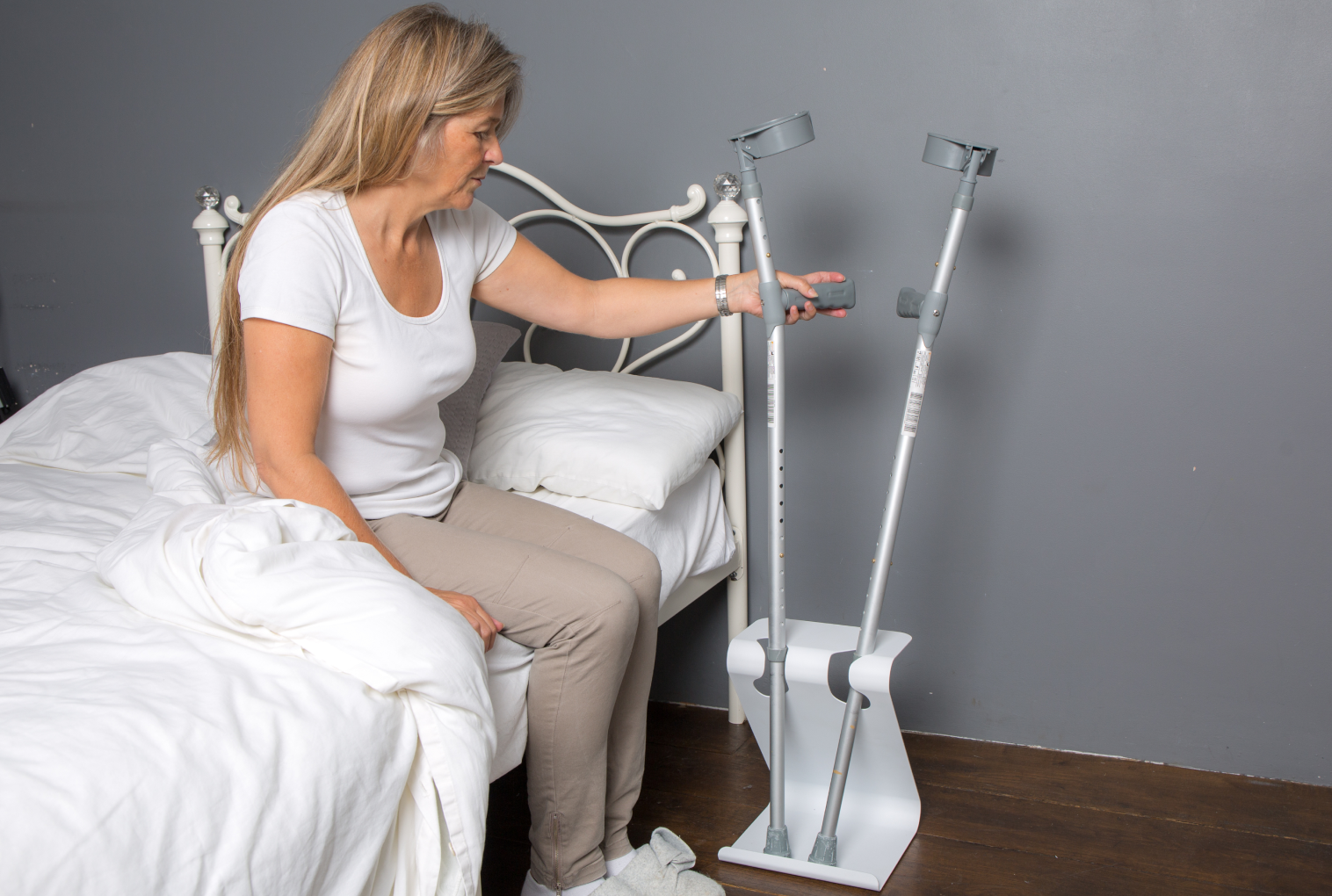
Crutch users need their crutches upright, facing them, and ready to be gripped. While an infirm, injured, or disabled person is seated, they must be able to reach out, grasp the handles, and use the crutches to help them stand.
This means there needs to be a safe place to ‘park’ cumbersome crutches, somewhere they can be securely placed and easily retrieved when needed.
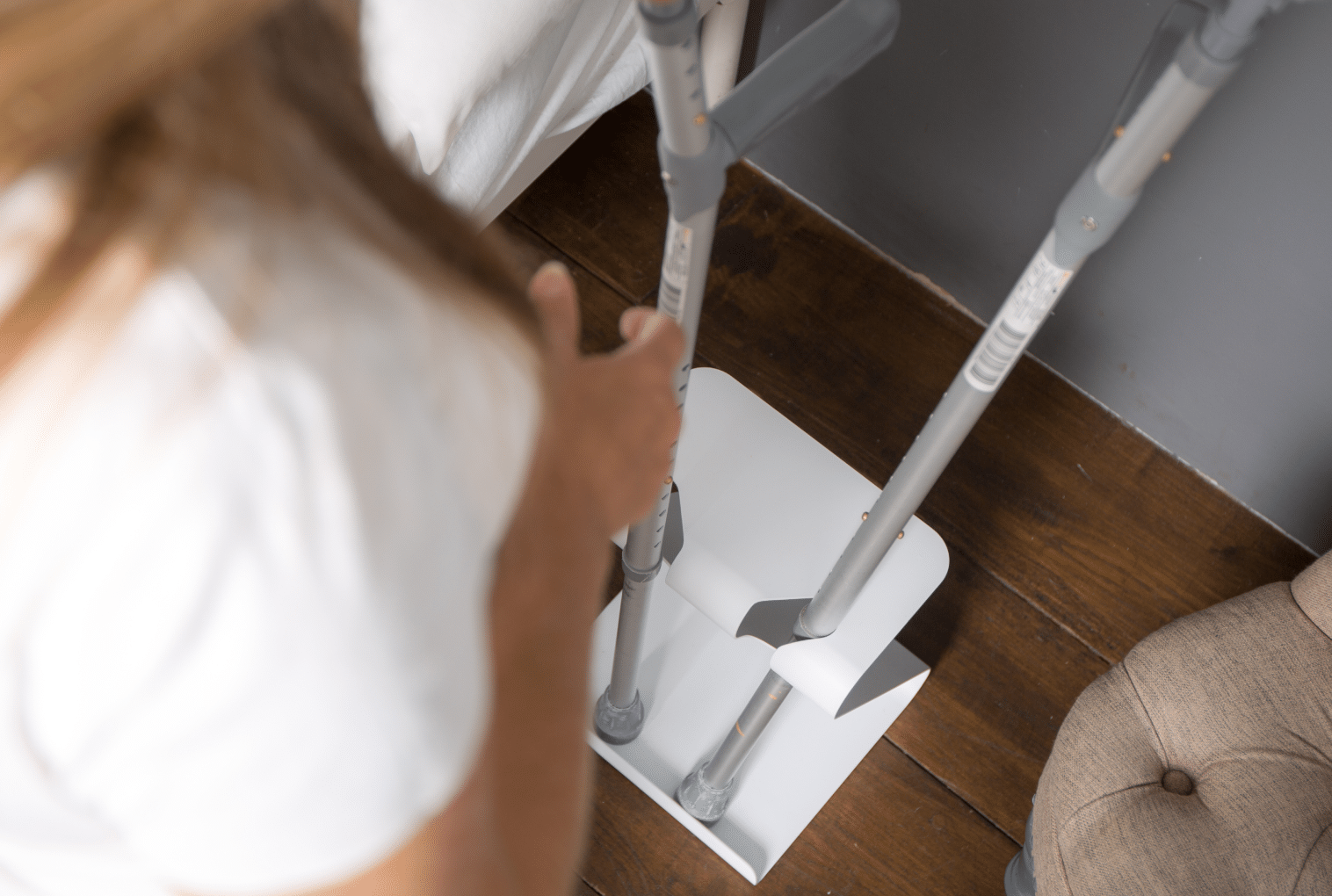
While crutch holders already exist, each comes with some clear limitations. Some need to be fixed to bed or attached to walls. Our brief was to design a walking aid holder that is fully independent (self-supporting), allows individual crutches to be loaded and removed effortlessly, without clipping or pushing and is suitable for medical environments.
The bang
Our designers explored a range of solutions that addressed overlapping requirements for both home and hospital use. These solutions needed a small footprint, and aesthetically pleasing appearance. The design needed to be both sustainable and easy to manufacture in order to keep unit costs down.
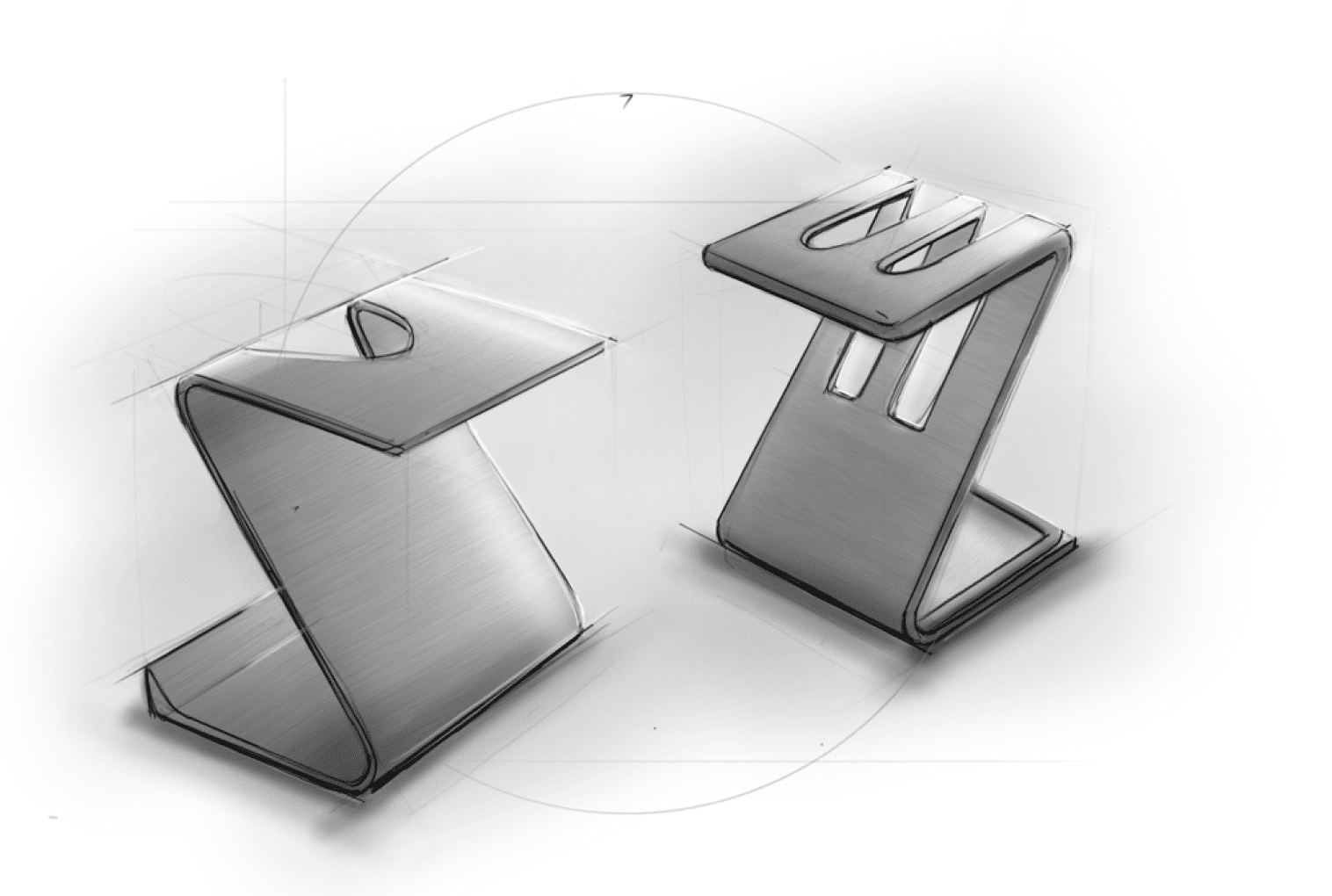
Bang modelled a series of concepts to visually communicate possible directions and material choices. Each concept was evaluated against a cost matrix. After dozens of prototypes, we arrived at a solution that did not “bounce out”, was easy to clean and maintain, a key hospital requirement. Stackable, easy to ship and store.
We then modelled and refined the design, adjusting angles to ensure precise positioning. Following prototyping and testing, the products’ flat blank size was optimised to suit standard sheet material sizes. It then proceeded to final batch production with manufacturers in the UK
The result
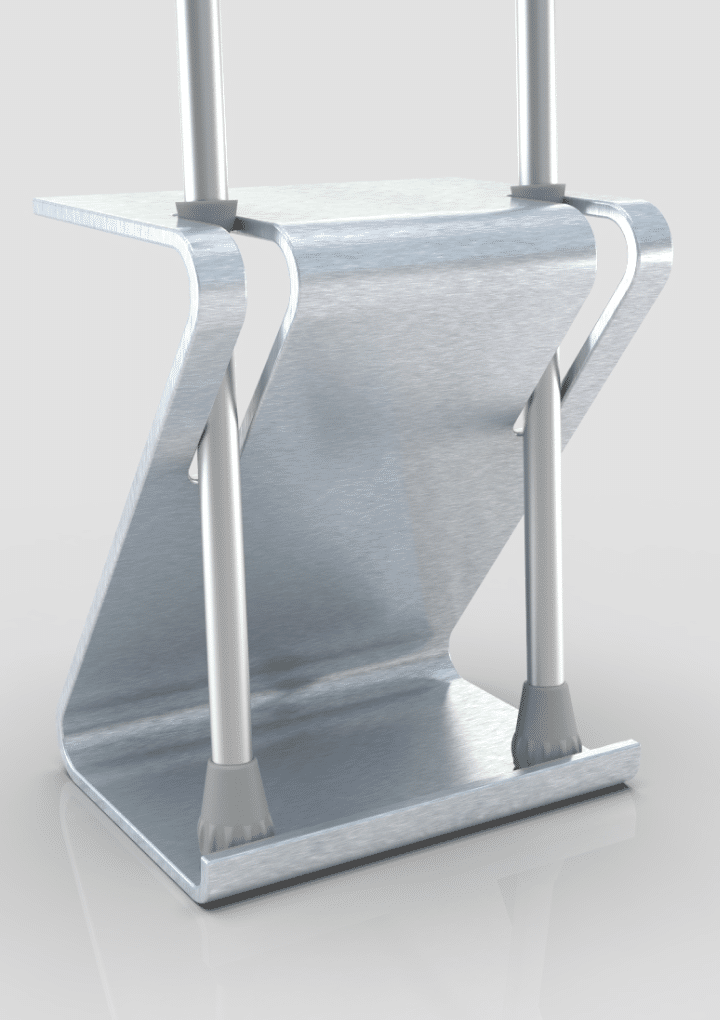
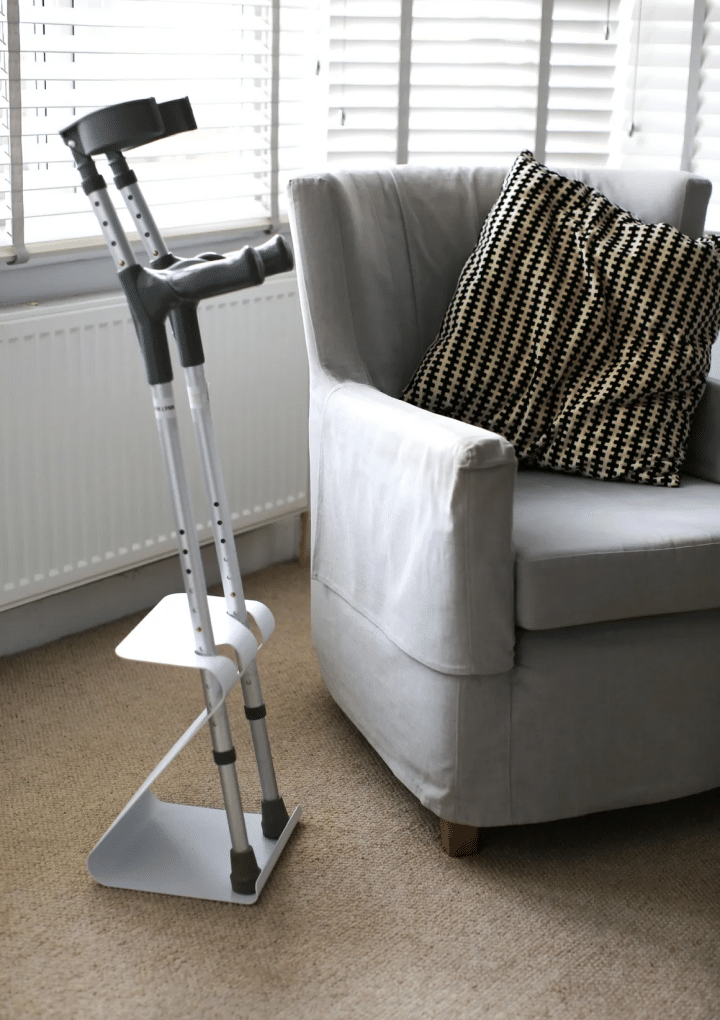
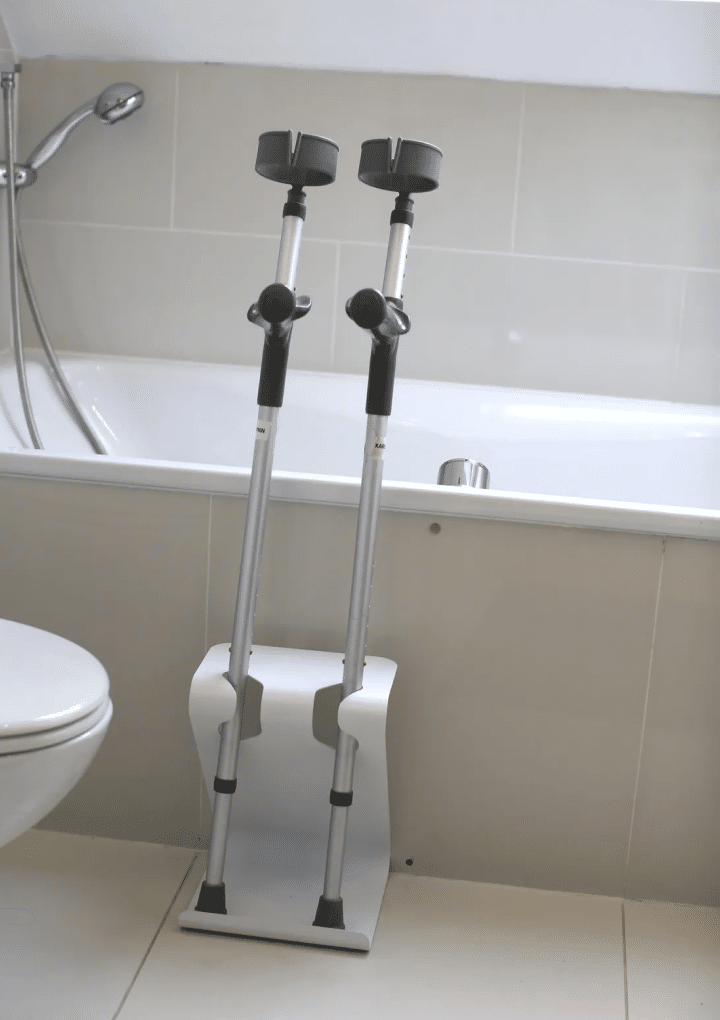
The result is a refined, one-piece form crafted from powder-coated sheet metal, minimal, robust, and purposefully designed. The solution is IP protected, sustainable and required no tooling investment. It can be manufactured in local markets, making it suitable for both domestic and clinical environments.
It is now selling as Stanza. The product combines considered design with commercial viability and has received strong endorsements from healthcare professionals and customers alike.
“I have observed first hand the positive impact of the StanZa holder on the psychological well-being of my patients. The assurance of immediate access to crutches contributes to a sense of empowerment, reducing anxiety and promoting a faster recovery process. Moreover, the secure placement of crutches during activities like the use of bathroom and WC adds an extra layer of safety and convenience”, Senior Physiotherapist


Walking Aid Holder:
Always in reach
The brief
Walking aids are often found on the floor rather than within easy reach of the person who needs them.
That was the problem entrepreneur and founder of Stanza brought to us.
Crutch users need their crutches upright, facing them, and ready to be gripped. While an infirm, injured, or disabled person is seated, they must be able to reach out, grasp the handles, and use the crutches to help them stand.
This means there needs to be a safe place to ‘park’ cumbersome crutches, somewhere they can be securely placed and easily retrieved when needed.
While crutch holders already exist, each comes with some clear limitations. Some need to be fixed to bed or attached to walls. Our brief was to design a walking aid holder that is fully independent (self-supporting), allows individual crutches to be loaded and removed effortlessly, without clipping or pushing and is suitable for medical environments.
The bang
Our designers explored a range of solutions that addressed overlapping requirements for both home and hospital use. These solutions needed a small footprint, and aesthetically pleasing appearance. The design needed to be both sustainable and easy to manufacture in order to keep unit costs down.
Bang modelled a series of concepts to visually communicate possible directions and material choices. Each concept was evaluated against a cost matrix. After dozens of prototypes, we arrived at a solution that did not “bounce out”, was easy to clean and maintain, a key hospital requirement. Stackable, easy to ship and store.
We then modelled and refined the design, adjusting angles to ensure precise positioning. Following prototyping and testing, the products’ flat blank size was optimised to suit standard sheet material sizes. It then proceeded to final batch production with manufacturers in the UK
The result
The result is a refined, one-piece form crafted from powder-coated sheet metal, minimal, robust, and purposefully designed. The solution is IP protected, sustainable and required no tooling investment. It can be manufactured in local markets, making it suitable for both domestic and clinical environments.
It is now selling as Stanza. The product combines considered design with commercial viability and has received strong endorsements from healthcare professionals and customers alike.
“I have observed first hand the positive impact of the StanZa holder on the psychological well-being of my patients. The assurance of immediate access to crutches contributes to a sense of empowerment, reducing anxiety and promoting a faster recovery process. Moreover, the secure placement of crutches during activities like the use of bathroom and WC adds an extra layer of safety and convenience”, Senior Physiotherapist
Walking Aid Holder:
Always in reach
The brief
Walking aids are often found on the floor rather than within easy reach of the person who needs them.
That was the problem entrepreneur and founder of Stanza brought to us.
Crutch users need their crutches upright, facing them, and ready to be gripped. While an infirm, injured, or disabled person is seated, they must be able to reach out, grasp the handles, and use the crutches to help them stand.
This means there needs to be a safe place to ‘park’ cumbersome crutches, somewhere they can be securely placed and easily retrieved when needed.
While crutch holders already exist, each comes with some clear limitations. Some need to be fixed to bed or attached to walls. Our brief was to design a walking aid holder that is fully independent (self-supporting), allows individual crutches to be loaded and removed effortlessly, without clipping or pushing and is suitable for medical environments.
The bang
Our designers explored a range of solutions that addressed overlapping requirements for both home and hospital use. These solutions needed a small footprint, and aesthetically pleasing appearance. The design needed to be both sustainable and easy to manufacture in order to keep unit costs down.
Bang modelled a series of concepts to visually communicate possible directions and material choices. Each concept was evaluated against a cost matrix. After dozens of prototypes, we arrived at a solution that did not “bounce out”, was easy to clean and maintain, a key hospital requirement. Stackable, easy to ship and store.
We then modelled and refined the design, adjusting angles to ensure precise positioning. Following prototyping and testing, the products’ flat blank size was optimised to suit standard sheet material sizes. It then proceeded to final batch production with manufacturers in the UK
The result
The result is a refined, one-piece form crafted from powder-coated sheet metal, minimal, robust, and purposefully designed. The solution is IP protected, sustainable and required no tooling investment. It can be manufactured in local markets, making it suitable for both domestic and clinical environments.
It is now selling as Stanza. The product combines considered design with commercial viability and has received strong endorsements from healthcare professionals and customers alike.
“I have observed first hand the positive impact of the StanZa holder on the psychological well-being of my patients. The assurance of immediate access to crutches contributes to a sense of empowerment, reducing anxiety and promoting a faster recovery process. Moreover, the secure placement of crutches during activities like the use of bathroom and WC adds an extra layer of safety and convenience”, Senior Physiotherapist